How-to
What is a GMT watch and how to use one
Published
Short answer
A GMT watch adds a fourth hand that goes around the dial once every 24 hours, read against a 24-hour scale on the bezel or dial. Set it to your home time, then set the main hands to local time. Turning the 24-hour bezel lets you read a third time zone from the same hand.
Watches and gear for this
All 6 picks compared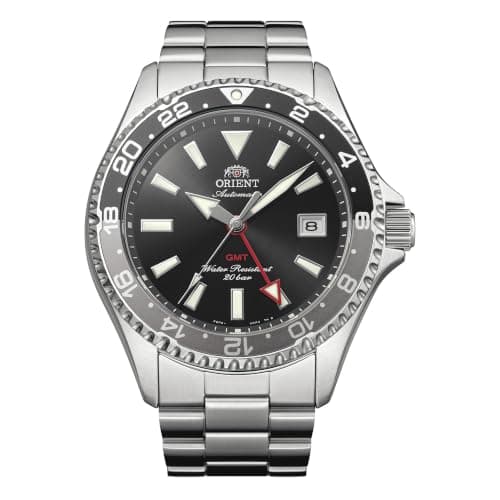
Orient Mako GMT: F6P22 with 24-hour bezel, 200 m
See price on AmazonSee it on Amazon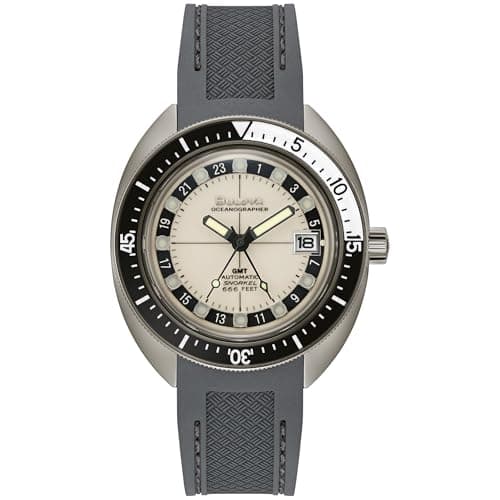
Bulova Oceanographer GMT: independent hour hand, 200 m
See price on AmazonSee it on Amazon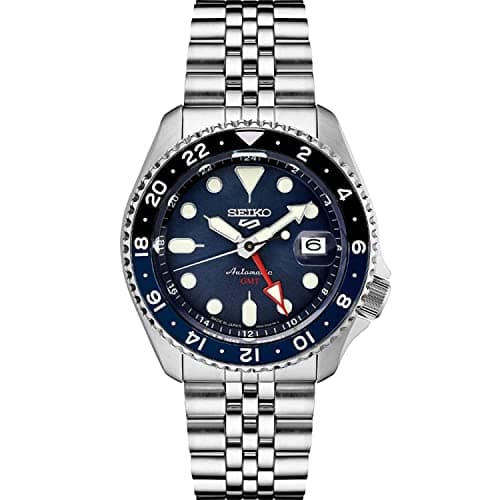
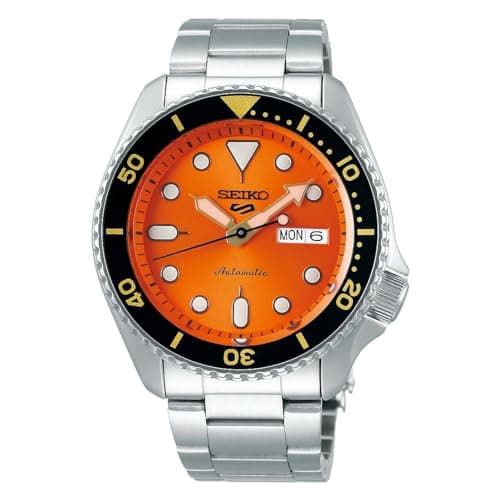
Seiko 5 Sports SSK001: 4R34 GMT under $500
See price on AmazonSee it on Amazon
GMT watches are made for travelers, remote workers and anyone who calls people in other time zones. This page explains what a GMT watch shows, the difference between a traveler's GMT and a caller's GMT, how to set one in the right order, and how to use the bezel to track a third zone. It applies to automatic GMT models like the Seiko 5 Sports SSK001, Orient Mako GMT and Bulova Oceanographer GMT.
What a GMT watch shows
GMT stands for Greenwich Mean Time, the old reference time for the world. A GMT watch has the normal hour, minute and seconds hands plus a 24-hour hand, often in a contrasting color with an arrow tip. The 24-hour hand makes one turn per day, so it can show whether it is 9 am or 9 pm in the other zone.
The 24-hour scale is usually on a rotating bezel, as on the Seiko SSK001 and Orient Mako GMT, or printed on the dial or a fixed bezel on some dressier models. Two time zones are read from the hands; a third is possible by rotating the bezel.
- 24-hour hand
- Lume tipped arrow. Points to home time on the bezel: 21:10.
- Hour hand
- Shows local time on the dial: 3:10 pm.
- 24-hour bezel
- One full turn of the 24-hour hand per day.
Traveler GMT vs caller GMT
There are two common designs. In a traveler or true GMT, the main hour hand jumps in one-hour steps on its own while the watch keeps running. You land, pull the crown, jump the hour hand to local time, and the 24-hour hand stays on home time. The Bulova Oceanographer GMT listing describes this as an independently adjusted hour hand for local time.
In a caller or office GMT, the 24-hour hand is the one that moves on its own. The main hour hand only moves together with the minute hand. This suits people who stay home and track a second zone for calls. Many affordable automatic GMTs work this way. Check your manual to see which kind you have; the setting order below covers both.
How to set a GMT watch
- 1
Wind the watch or make sure it is running.
- 2
Pull the crown to the time-setting position (usually the last click). Set the main hour and minute hands to your home time, watching the 24-hour hand so it points to the correct home hour on the 24-hour scale (for example 14 for 2 pm).
- 3
Push the crown in to the middle position. On a traveler GMT, turn it to jump the main hour hand to local time. On a caller GMT, turn it to move the 24-hour hand to the second zone's time.
- 4
Set the date in the same middle position if your watch has one. On many GMTs the date follows the local hour hand.
- 5
Rotate the bezel so 24 or the triangle is at the top when you want the 24-hour hand to read directly against the dial's own hour time.
- 6
Push the crown in and screw it down if it is a screw-down crown.
Note.As with any date watch, avoid changing the date while the hands are between about 9 pm and 3 am unless your manual says it is safe. See how to set an automatic watch.
Reading a third time zone with the bezel
Once home time is on the 24-hour hand with the bezel at zero, you can add a third zone without touching the crown. Count the time difference in hours between the zone the 24-hour hand shows and the third zone. Rotate the bezel until the number under the 24-hour hand has changed by that many hours: a higher number if the third zone is ahead, a lower number if it is behind. Now read the 24-hour hand against the rotated bezel for the third zone. Rotate back to zero to return to the original reading.
Example: the 24-hour hand is on New York time and you want London, which is usually five hours ahead. Turn the bezel so the 24-hour hand points five hours later on the scale. When the 24-hour hand reads 14 against the fixed position, the bezel reads 19 for London.
Dive watch with GMT: what to know
Some GMT watches, like the Orient Mako GMT with 200 m water resistance per its listing, have a dive-style case but a 24-hour bezel instead of a 60-minute timing bezel. That means you lose the elapsed-minute bezel used for diving. If you need both, look for a model with a separate 24-hour scale on the dial. See how to use a dive watch bezel for the timing bezel.
Choosing a GMT watch
- Traveler GMT if you fly often and want local time on the main hands.
- Caller GMT if you mostly stay home and track a colleague's zone.
- Bidirectional 24-hour bezel if you plan to use the third-zone trick often.
- Legibility: a bright, distinct 24-hour hand is easier to read at a glance.
- Size: GMT cases are often larger, so check lug to lug against your wrist.
Frequently asked questions
What does GMT mean on a watch? It refers to Greenwich Mean Time and means the watch has a 24-hour hand for tracking a second time zone.
Is the Seiko SSK001 a true GMT? The SSK001 uses Seiko's 4R34 caliber, where the crown adjusts the 24-hour hand independently. That is generally described as a caller-style GMT. Check Seiko's manual for your reference.
Can a GMT watch show three time zones? Yes. The main hands show one zone, the 24-hour hand shows a second, and rotating the 24-hour bezel lets the same hand show a third.
Do I need a GMT watch for travel? Not strictly, but it saves mental math and lets you check home time at a glance without unlocking your phone.