Explainer
Is the Tissot PRX waterproof
Published
Short answer
The Tissot PRX is water resistant, not waterproof. Tissot rates it at 10 bar (100 m), and its listings describe that as suitable for short periods of recreational swimming and showering, but not for diving or snorkeling. Keep the crown pushed in, avoid hot water, and have the seals checked at service.
Watches and gear for this
All 7 picks compared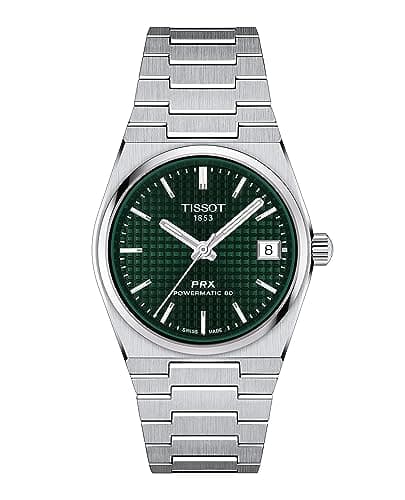
Tissot PRX 35 mm Powermatic 80: smaller wrists
See price on AmazonSee it on Amazon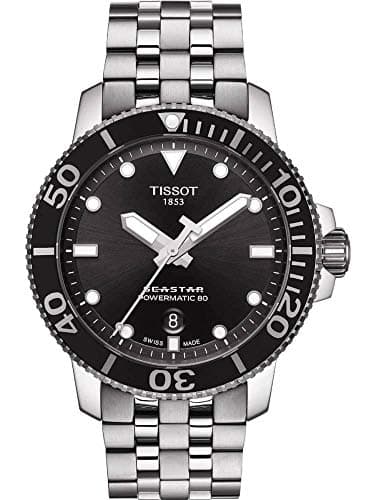
Tissot Seastar 1000 43 mm: 300 m automatic diver
See price on AmazonSee it on Amazon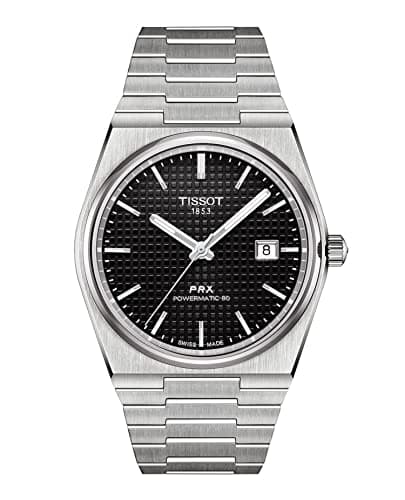
Tissot PRX 40 mm automatic: 10.93 mm, 100 m
See price on AmazonSee it on Amazon
The PRX looks like a sports watch, and many owners wonder whether it can go in the pool or the sea. This page explains what the PRX's 100 m rating means, what Tissot says about it, how it compares with a true dive watch, and the habits that keep water out. It applies to both the quartz and Powermatic 80 versions, which carry the same rating in current listings. If you are still deciding on the watch, see is the Tissot PRX worth it.
What Tissot says about PRX water resistance
Current Tissot PRX listings, for both the 35 mm and 40 mm automatics, give the rating as water-resistant up to a pressure of 10 bar (100 m / 330 ft). The listings add that this is suitable for short periods of recreational swimming and showering, but not for diving or snorkeling.
That wording is more careful than many brands use for a 100 m watch, and it is worth following. The maker knows the case, crown and seals, and its guidance is the one that counts for warranty questions.
What 100 m water resistance actually means
A water resistance rating is a pressure the watch passed in a static test, not a depth you can take it to. Moving your arm through water, jumping in, or water jets add pressure beyond still water at the same depth. That is why a 100 m rating does not mean you can dive to 100 m.
The table below shows the general guidance many makers publish for each rating. Use our water resistance decoder to check any rating, and read water resistance ratings explained for more.
| Rating | Common guidance |
|---|---|
| 30 m / 3 bar | Splashes, rain, hand washing. No swimming. |
| 50 m / 5 bar | Brief light swimming. No diving or snorkeling. |
| 100 m / 10 bar (PRX) | Swimming. Tissot says no diving or snorkeling for the PRX. |
| 200 m / 20 bar | Swimming, snorkeling and recreational scuba on a diver's watch. |
Swimming, showers and the beach
- Pool swimming: fine per Tissot's guidance for short recreational sessions. Rinse off chlorine afterward.
- Sea swimming: fine for a short swim. Rinse in fresh water afterward so salt does not dry in the bracelet.
- Showering: Tissot's listing allows it, but soap and shampoo can wear on seals over time, and hot water is a known risk for gaskets. Many owners take the watch off to be safe.
- Hot tubs and saunas: avoid. Heat makes seals and metal expand at different rates.
- Snorkeling and diving: Tissot's listing says no. Use a watch built for it, such as one from our best dive watches under $1,000.
Habits that keep water out
- 1
Check the crown is pushed fully in before the watch gets wet. The PRX crown is a push-pull design, not screw-down, so it must be fully home.
- 2
Never pull the crown out while the watch is wet or underwater.
- 3
Rinse with fresh water after salt water or chlorine, then dry with a soft cloth.
- 4
If you see fog or droplets under the crystal, dry the watch and take it to a watchmaker soon. Moisture inside can cause corrosion.
- 5
Have the water resistance tested when the watch is serviced or the battery changed, since gaskets age.
Note.Water resistance is not permanent. Seals dry out and wear, and a knock can disturb them. A pressure test at a watchmaker is quick and cheap insurance before a beach trip.
PRX vs a true dive watch
A dive watch built to ISO 6425 is tested for more than depth. It needs a unidirectional timing bezel, legible lume in the dark, shock and magnetic resistance, and a margin above its rating. Most also use a screw-down crown. The PRX has none of these features, and it was never meant to; it is a sports watch for daily wear.
If you want one watch for the office and the reef, look at divers with 200 m ratings such as the Seiko Prospex or Tissot Seastar. Read what is ISO 6425 to see what the dive standard requires, or compare styles in dive watch vs dress watch.
Quartz or automatic: does it change water resistance?
Water resistance depends on the case, crystal, caseback and crown seals, not the movement inside. Current listings give the PRX quartz and the PRX Powermatic 80 the same 10 bar rating, so the same rules apply to both.
There is one practical difference. A quartz PRX needs its battery changed every few years, and every time the caseback is opened, the gasket should be checked or replaced and the watch pressure tested. An automatic PRX is opened less often, usually only at service. Either way, ask for a water resistance test whenever the case is opened, and do not rely on an old rating after a battery change done without one. See PRX quartz vs Powermatic 80 for other differences between the two.
Frequently asked questions
Can I swim with my Tissot PRX? Yes, for short recreational swims, per Tissot's own listing. Keep the crown pushed in and rinse the watch afterward.
Can I shower with the Tissot PRX? Tissot's listing says showering is fine. Hot water and soap can age seals faster, so many owners remove it anyway.
Is the PRX quartz as water resistant as the automatic? Current listings give the same 10 bar (100 m) rating for the quartz and Powermatic 80 versions.
Does the Tissot PRX have a screw-down crown? No. It uses a push-pull crown, so make sure it is pushed fully in before the watch gets wet.
What you need for this
- See price on AmazonAmazon
Tissot PRX 35 mm Powermatic 80: smaller wrists
From Best Tissot automatic watches: PRX, Seastar, Le Locle and more
 See price on AmazonAmazon
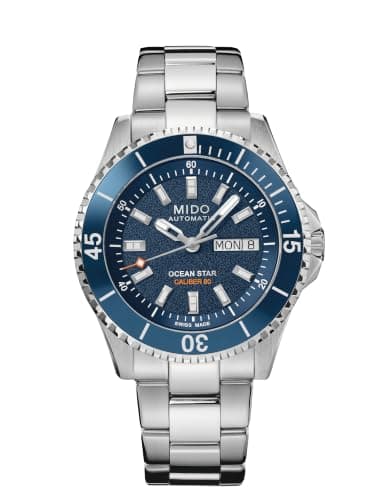
Mido Ocean Star 200, 80 hours, sapphire, 200 m
 See price on AmazonAmazon
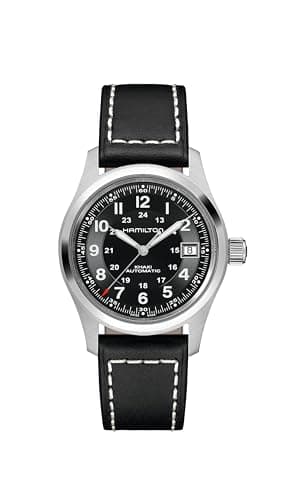
Hamilton Khaki Field Auto 38mm, H-10, 100 m