Explainer
Watch winder TPD settings by brand and movement
Published
Short answer
TPD means turns per day: how many full rotations the winder gives your watch in 24 hours. Use the figure and direction published by your watch maker or your winder maker's database for your movement. If you cannot find one, start with bidirectional at the lowest setting your winder offers and raise it only if the watch stops.
Watches and gear for this
All 8 picks compared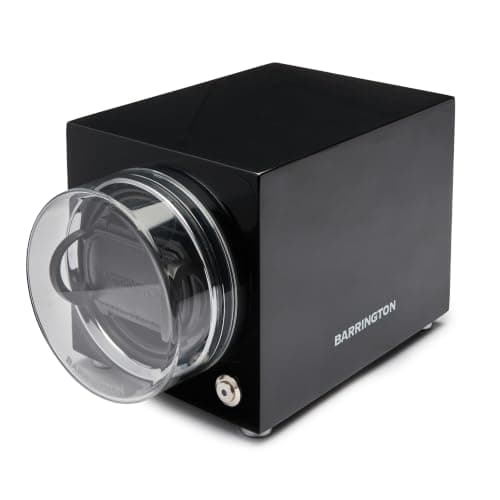
Barrington Single: 5 TPD settings, 3 directions
See price on AmazonSee it on Amazon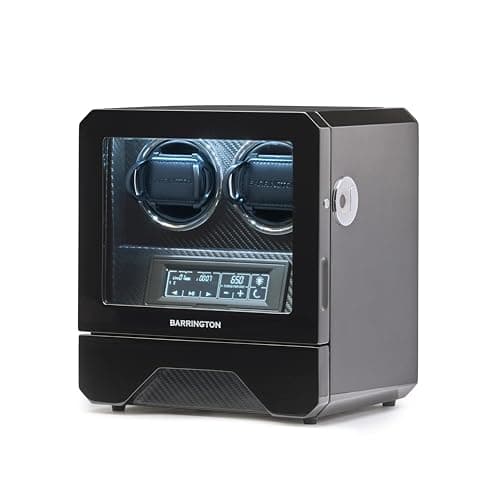
Barrington Double: fingerprint lock and remote
See price on AmazonSee it on Amazon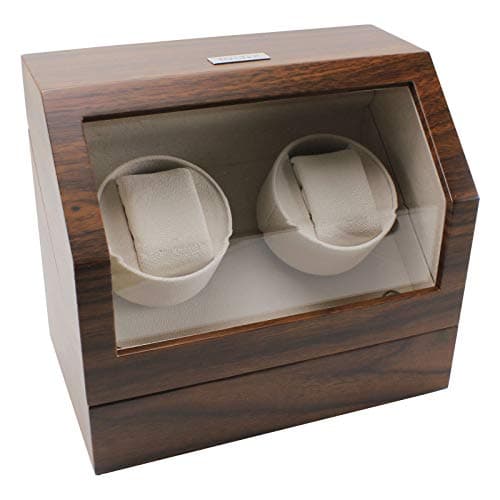
Heiden Double in walnut: 2 watches, battery or AC
See price on AmazonSee it on Amazon
Watch winders let you set turns per day and direction, and the numbers can look arbitrary. This page explains what TPD and direction mean, why automatic movements need different settings, where to find a reliable figure for your watch, and which TPD settings popular winders from Wolf, Barrington, Orbita, Heiden and Rothwell offer according to their listings. It finishes with a simple method to dial in a watch when you have no published figure.
What TPD and direction mean
Turns per day is the total number of full rotations the winder makes in 24 hours. Winders do not spin constantly. They run in bursts with rest periods, which reduces wear and copies the irregular motion of a wrist. Direction is clockwise, counterclockwise or bidirectional (alternating). Some winders count bidirectional turns differently, so read your manual.
Inside the watch, the rotor swings with each turn and winds the mainspring through a gear train. Some movements wind when the rotor turns either way, others only in one direction. A winder spinning only in the non-winding direction does nothing useful. That is why direction matters as much as TPD.
Where to find the right setting for your watch
- 1
Check your watch maker's manual or support pages. Some makers publish recommended winding settings for their calibers.
- 2
Check your winder maker's database. Barrington's listing, for example, tells buyers to check its online database for your watch's settings, and several winder brands publish similar tables by brand and caliber.
- 3
Find your caliber name on the listing, caseback or manual (for example Seiko 4R36, Orient F6922, Powermatic 80 or Hamilton H-10) and search the database by caliber, not just by brand.
- 4
If sources disagree, use the lower figure and the direction both agree on, then test as described below.
Note.Treat any TPD chart that does not name its source with caution. Published maker figures are the safest guide.
TPD settings offered by popular winders
These are the settings each winder offers according to its product listing. They are winder capabilities, not recommendations for a specific watch.
| Winder | TPD options | Directions |
|---|---|---|
| Wolf Heritage and Rocket | 900 TPD | Clockwise, counterclockwise, bidirectional (listing says bidirectional doubles TPD) |
| Wolf Axis and Module 4.1 | 300 to 1,200 TPD | Clockwise, counterclockwise, bidirectional |
| Barrington single and double | 650, 750, 850, 1,000, 1,950 | Clockwise, counterclockwise, bidirectional |
| Rothwell double | 650, 750, 850, 1,000, 1,950 | Three rotation modes |
| Heiden double | 650, 950, 1,250, 1,850 | Clockwise, counterclockwise, both |
| Orbita Sparta (Rotorwind) | About 800 to 900 or 1,200 to 1,300 | Swings back and forth |
Dial in a watch without a published figure
- 1
Wind the watch fully by hand (most modern automatics allow it) or wear it all day, and set the time.
- 2
Put it on the winder at bidirectional and the lowest TPD setting.
- 3
Leave it for two or three days. Check whether it is still running and whether the time is still close.
- 4
If it stopped or is running down, raise TPD one step and repeat.
- 5
Once it runs reliably, leave it there. More turns than needed add rotor wear without benefit.
Can you overwind with too many turns?
No. Automatic movements have a slipping bridle on the mainspring that lets it slip inside the barrel once fully wound, so the spring cannot be overwound. The cost of a high TPD is extra running of the rotor and winding gears, which adds wear over the years. That is why the goal is the lowest setting that keeps the watch running, not the highest.
If you rotate several watches and wear each every few days, a long power reserve may make a winder unnecessary. Powermatic 80 and H-10 watches list up to 80 hours. Read do you need a watch winder and are watch winders bad for watches before you buy.
Choosing a winder with good TPD control
If you own several watches with different movements, choose a winder with separate settings for each position, as the Heiden and Barrington double listings describe. If you own one luxury watch, a single winder with fine TPD control, such as Wolf's 300 to 1,200 range, lets you match a published figure closely. See best single watch winders and best watch winders for luxury watches, and read how to use a watch winder for setup.
Frequently asked questions
What TPD should I use for a Seiko? Look up your exact caliber, such as 4R36, in Seiko's documentation or your winder maker's database. If you cannot find a figure, start bidirectional at your winder's lowest setting and increase only if the watch stops.
Is bidirectional always safe? Bidirectional works with movements that wind in either direction and with one-direction movements, since half the turns still wind them. You may need a higher TPD for a one-direction movement.
Does a watch winder need a TPD calculator? No. A calculator only converts cycles to turns. The figure that matters is the one published for your movement.
Why did my watch stop on the winder? Usually TPD is too low or the direction is wrong for the movement. See watch winder not turning if the winder itself stopped.
What you need for this
- See price on AmazonAmazon
Barrington Single, five TPD settings, 6.5 to 8.5 in