Explainer
Why some dive watches have helium valves
Published
Short answer
A helium escape valve lets helium out of a watch case during decompression. Saturation divers live for days in pressurized chambers breathing helium mixtures, and helium atoms are small enough to seep past gaskets. When the chamber pressure drops, gas trapped inside the watch can push the crystal off. The valve releases it. Recreational divers and swimmers never need one.
Watches and gear for this
All 8 picks compared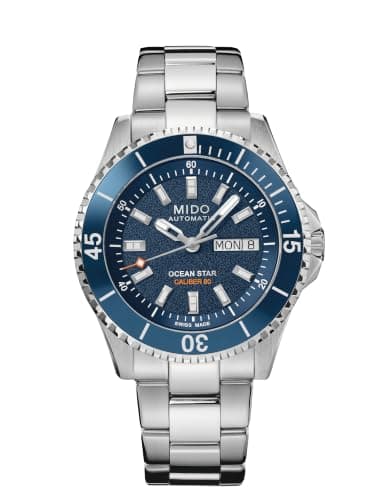
Mido Ocean Star 200, 80 hours, sapphire, 200 m
See price on AmazonSee it on Amazon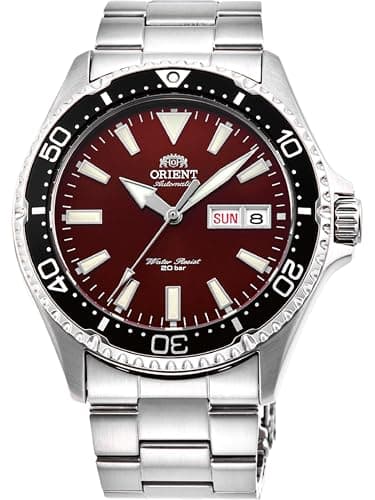
Orient Kamasu 41.8mm, sapphire, 200 m
See price on AmazonSee it on Amazon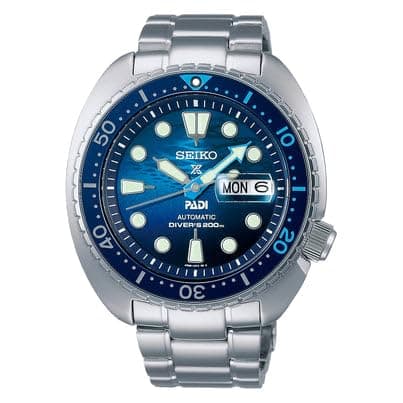
Seiko Prospex SRPK01 45mm, sapphire, 200 m
See price on AmazonSee it on Amazon
Some high end dive watches have a small extra crown or button on the side of the case, usually at 9 or 10 o'clock, labeled He. Buyers often wonder whether they need it, whether it is a weak point, and what it does. This page is for anyone looking at a serious diver such as the Tissot Seastar 2000, or just curious about the feature. It explains saturation diving, why helium causes a problem for watches, how the two types of valve work, how to look after one, and why most owners will never open it.
The problem helium causes
Commercial divers who work at great depth, for example on offshore oil and gas installations, often use saturation diving. Instead of returning to the surface after each dive, they live for days or weeks in a pressurized habitat on a ship or platform, kept at roughly the pressure of the depth where they work. They breathe a mixture that uses helium in place of most of the nitrogen in air, because nitrogen becomes narcotic at high pressure.
Helium atoms are very small. Over days in the chamber, helium can slowly diffuse past a watch's gaskets and build up inside the case until the pressure inside matches the chamber. At the end of the job, the divers decompress slowly back to surface pressure. The helium inside the watch cannot escape as fast as the outside pressure drops, so the case is briefly pressurized from the inside. In early cases, that pressure could push the crystal out of the case.
How a helium escape valve solves it
The valve is a one way release. When the pressure inside the case rises above the pressure outside by a set amount, the valve opens and lets the gas out, then closes again. It does not let water in, because during a dive the outside pressure is always higher and keeps the valve shut.
The feature first appeared in the late 1960s on watches made for professional saturation divers, and it has stayed a hallmark of high spec divers since. Some makers chose a different route and built cases with so few openings and such tight seals that helium could not get in at all. Both approaches are valid; the goal is that the crystal stays put.
Automatic vs manual helium valves
Which type a watch has is in the maker's manual. The Tissot Seastar 2000 listings, for example, mention a helium valve alongside a 600 m rating, a screw down crown and a ceramic bezel. If your watch has a manual valve, treat it like a second crown: keep it screwed shut and check it before swimming.
| Type | How it works | What the owner does |
|---|---|---|
| Automatic | Spring loaded valve opens on its own when internal pressure exceeds external pressure | Nothing. It sits flush in the case side |
| Manual | Screw down crown that seals the valve when closed | Keep it screwed down; unscrew it only during decompression in a chamber |
Note.Never open a manual helium valve in water. It is not meant to be operated outside a decompression chamber.
Do you need one
Almost certainly not. Recreational scuba divers breathe air or enriched air, do not live at pressure, and surface within hours. Helium does not have time to enter a watch in any meaningful amount. Swimmers and snorkelers have even less reason to care.
So why do so many luxury and mid range divers have one? Partly because the brands making top tier divers built them for professionals first, and the feature became part of the look and the spec sheet. A helium valve signals that the case was engineered for the most demanding use, and many buyers like that, the same way they like a 600 m rating they will never test.
For actual dives, a 200 m diver's watch that meets ISO 6425 is plenty, and many good ones are in our best dive watches under $500 and best dive watches under $1,000. Read water resistance ratings explained and what is ISO 6425 for how to choose.
Is a helium valve a weak point
Any opening in a case is a place where water could get in if the seal fails, so a valve adds one more gasket to maintain. Makers design and test these valves to the full water resistance rating of the watch. In practice the risk comes from neglect: aging gaskets and, on manual valves, forgetting to screw the valve back down.
Have the valve checked as part of the normal pressure test at service, the same as the crown and caseback. If you buy a used diver, ask whether the seals were replaced at the last service.
- Check that a manual valve is fully screwed down before every swim.
- Rinse salt and sand away from the valve and crown with fresh water.
- Include the valve gasket in the water resistance test at each service.
- Do not try to open or lubricate the valve yourself.
Frequently asked questions
What does He mean on a watch? He is the chemical symbol for helium. It marks the helium escape valve on the case side.
Does a helium valve let water in? Not when it is working and, on manual valves, screwed shut. During a dive, the higher pressure outside keeps it closed.
Do I need to use the helium valve when scuba diving? No. It only matters after long stays in a pressurized helium environment, as in saturation diving. Leave it alone on recreational dives.
Do all professional dive watches have one? No. Some divers built for very deep use rely on a sealed case design that keeps helium out instead of letting it escape.