How-to
How to measure your wrist for a watch
Published
Short answer
Wrap a soft tape measure, a string or a strip of paper around your wrist just above the wrist bone, where a watch sits. Note the length in inches or millimeters. Then measure the flat top of your wrist from side to side, because a watch fits when its lug to lug is no wider than that flat area, whatever the case diameter.
Watches and gear for this
All 8 picks compared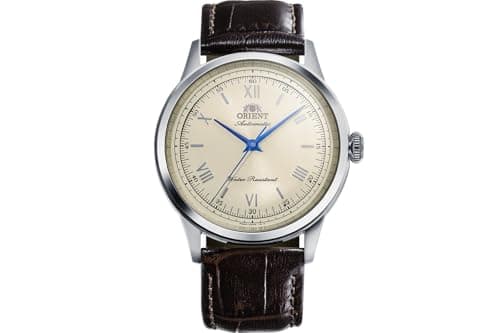
Orient Bambino No Date 38.4mm, 44 mm lug to lug
See price on AmazonSee it on Amazon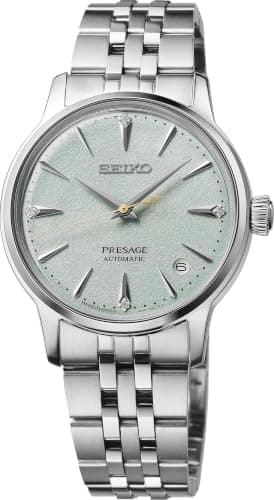
Seiko Presage SRPL63 34mm, 40.4 mm lug to lug
See price on AmazonSee it on Amazon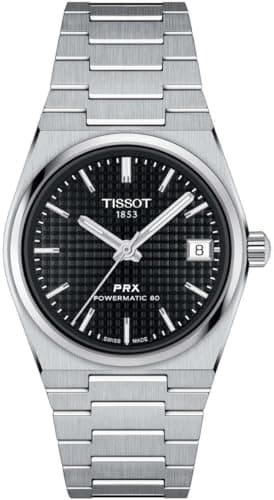
Tissot PRX 35mm Powermatic 80, 10.93 mm thick
See price on AmazonSee it on Amazon
This page is for anyone shopping for an automatic, dive, field or dress watch online who cannot try it on first. You will learn three ways to measure your wrist at home, how to measure the flat top of the wrist that really decides fit, and how to turn both numbers into a case size and lug to lug range. At the end you can plug your numbers into our wrist fit calculator and shortlist watches from our size-specific guides.
What you need and where to measure
You need one of three things: a soft sewing tape measure, a piece of non-stretch string or thin cord, or a strip of paper about half an inch wide. You also need a ruler if you use string or paper, and a pen to mark the strip.
Measure where the watch will actually sit. For most people that is just above the knobby wrist bone (the ulnar styloid) on the side toward the elbow. Measuring over the bone gives a bigger number than the spot where the case rests and will push you toward watches that are too large. Measure the wrist you wear a watch on; many people have a slightly larger dominant wrist.
Note.Measure with your hand relaxed and fingers loose. A clenched fist makes the wrist tendons stand up and adds width.
Three ways to measure wrist circumference
Any of these methods gives a usable number. Measure twice and use the average if the readings differ.
- 1
Tape measure: wrap the tape around the wrist just above the bone. It should lie flat and snug but not dent the skin. Read the number where the tape overlaps the zero end.
- 2
String: wrap the string around the same spot, pinch where it meets the end, then lay it flat along a ruler and read the length.
- 3
Paper strip: wrap the strip around the wrist, mark where the end overlaps with a pen, unroll it and measure to the mark with a ruler.
- 4
Write the number down in both inches and millimeters (inches x 25.4 = millimeters). Watch specs are almost always listed in millimeters.
Why the flat top of your wrist matters more than circumference
Two people with 7 inch wrists can need different watches. One may have a round wrist and the other a flat, wide one. What decides fit is how much flat surface there is on top of the wrist for the case and lugs to sit on. If the lug tips extend past the edges of that flat area, the watch looks oversized and the strap stands away from the sides of the wrist.
To measure it, look down at your wrist and lay a ruler across the top, from where the wrist starts to curve down on the thumb side to where it curves down on the pinky side. A rough rule used by our wrist fit calculator estimates this flat width at about 30 percent of circumference, but your own measurement is better.
Then compare that width with the watch's lug to lug, the distance from the tip of the top lugs to the tip of the bottom lugs. Lug to lug at or below your flat width usually fits. A few millimeters over is borderline. Well over usually overhangs. Read lug to lug explained for how to find this number when a listing leaves it out.
Turn your measurement into a watch size
The table shows a common guideline for case diameter by wrist circumference. It is a starting point, not a rule. Case thickness, lug shape, dial design and bezel width all change how big a watch wears, and personal taste matters too.
| Wrist circumference | In millimeters | Typical case diameter |
|---|---|---|
| Under 6.0 in | Under 152 mm | 34 to 38 mm |
| 6.0 to 6.5 in | 152 to 165 mm | 36 to 40 mm |
| 6.5 to 7.0 in | 165 to 178 mm | 38 to 42 mm |
| 7.0 to 7.5 in | 178 to 191 mm | 40 to 44 mm |
| 7.5 to 8.0 in | 191 to 203 mm | 42 to 46 mm |
| Over 8.0 in | Over 203 mm | 44 mm and up |
Other sizing details worth checking
- Case thickness: a 13 mm thick dive watch wears taller and more top-heavy than a 10 mm dress watch of the same diameter, and is harder to slide under a shirt cuff.
- Dial and bezel: a wide dive bezel makes the dial look smaller, so a 42 mm diver can look smaller than a 40 mm dress watch with a thin bezel and a big white dial.
- Lug width: the strap width affects visual balance. See lug width explained.
- Bracelet length: if the watch comes on a bracelet, your circumference tells you how many links to remove. See how to size a watch bracelet.
- Strap curve: straps that drop sharply from the lugs hug small wrists better than stiff straight-end bracelets.
Where to go next by wrist size
If your wrist is under about 6.5 inches, start with automatic watches for small wrists, where we list case diameter and lug to lug side by side. If your wrist is over about 7.5 inches, the large wrists guide focuses on bigger cases that still sit flat. For a full table of sizes, see the watch size chart by wrist size, and browse the rest of the fit and sizing articles.
Frequently asked questions
What is the average wrist size? Adult wrists commonly fall somewhere between about 6 and 7.5 inches, with men's wrists generally larger than women's. Your own measurement matters far more than any average, so measure rather than guess.
Should I measure snug or loose? Measure snug against the skin without compressing it. Then add room for comfort when you size a strap or bracelet: most people like to slide one finger under the band.
Is a 40 mm watch too big for a 6.5 inch wrist? Often not. A 40 mm case with short lugs can fit a 6.5 inch wrist well, while a 40 mm case with long lugs may overhang. Compare lug to lug with the flat top of your wrist to know for sure.
Does wrist size change during the day? Yes. Wrists can swell slightly in heat, after exercise or later in the day. That is one reason many people prefer a bracelet clasp with a micro-adjustment or a strap with several holes.