Explainer
Lug to lug explained: the number that decides fit
Published
Short answer
Lug to lug is the distance from the tip of the top lugs to the tip of the bottom lugs, measured across the watch face. It decides whether a watch sits on top of your wrist or hangs over the edges, which is why it predicts fit better than case diameter. As a common guideline, the lug to lug should not be wider than the flat top of your wrist.
Watches and gear for this
All 8 picks compared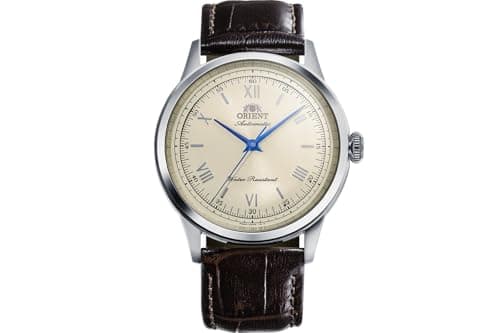
Orient Bambino No Date 38.4mm, 44 mm lug to lug
See price on AmazonSee it on Amazon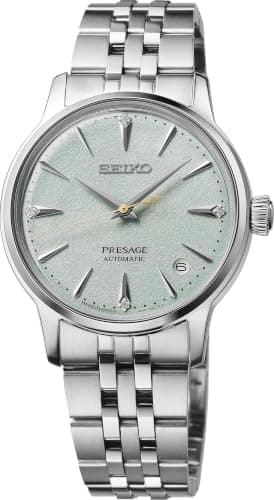
Seiko Presage SRPL63 34mm, 40.4 mm lug to lug
See price on AmazonSee it on Amazon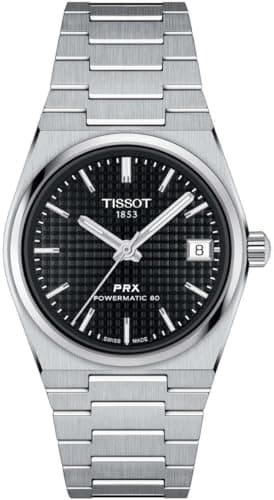
Tissot PRX 35mm Powermatic 80, 10.93 mm thick
See price on AmazonSee it on Amazon
Most watch listings lead with case diameter, but two watches with the same diameter can wear very differently. The reason is usually lug to lug: the length of the case from tip to tip. This page is for anyone buying a watch online who wants it to fit the first time. It explains what lug to lug is, how to measure your own watch and wrist, how it compares to diameter and thickness, and why a compact 40 mm diver can feel bigger than a 42 mm field watch. You will also find real lug to lug figures from listings for popular Seiko and Orient models, and a calculator that does the math for your wrist.
What lug to lug measures
The lugs are the four horns that stick out from the case and hold the strap or bracelet. Lug to lug is the straight line distance from the end of the lugs at 12 o'clock to the end of the lugs at 6 o'clock. Case diameter, by contrast, is measured side to side across the case, usually without the crown.
Your wrist is roughly an oval. The top is fairly flat, then it curves away at the sides. A watch case is rigid, so if the lugs extend past the flat top, they float in the air or press into the sides of your wrist. That overhang is what makes a watch look too big in photos, even when the diameter seems reasonable on paper. Lug width is a different number: the gap between the lugs where the strap fits, covered in our lug width guide.
Why lug to lug matters more than diameter
Case diameter tells you how big the dial looks. Lug to lug tells you how much of your wrist the watch actually occupies. Designers can make the same 40 mm case wear small with short, steeply curved lugs, or wear large with long, straight lugs. Bezels, crown guards and integrated bracelets change the picture again.
This is why a 40 mm dive watch can wear bigger than a 42 mm field watch. Divers often have a thick rotating bezel, a wide case and long lugs to hold a heavy bracelet. A field watch with the same or larger diameter may have a thin bezel, short lugs and a light canvas strap, so it covers less of the wrist from end to end. Thickness adds to the effect: a tall case sits higher and makes the whole watch look bigger.
If a listing gives only the diameter, look for the lug to lug in the maker's specifications or measure a watch you already own and compare.
| Watch | Case diameter | Lug to lug | Thickness |
|---|---|---|---|
| Seiko Presage Cocktail Time SRPL63 (women's) | 34 mm | 40.4 mm | 10.7 mm |
| Orient Bambino Version 7 | 38.4 mm | 44 mm | 12.5 mm |
| Orient 40 mm diver RA-AC0Q09R30B | 39.9 mm | 46.5 mm | Not listed |
| Orient Kamasu | 41.8 mm | 47 mm | 12.8 mm |
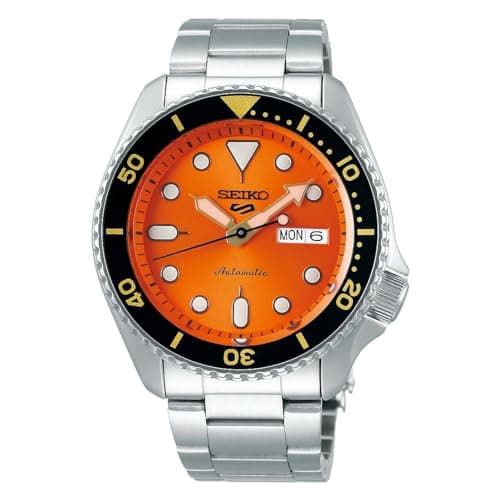
| Seiko Prospex SRPL11 | 41.7 mm | 49.5 mm | 12.3 mm |
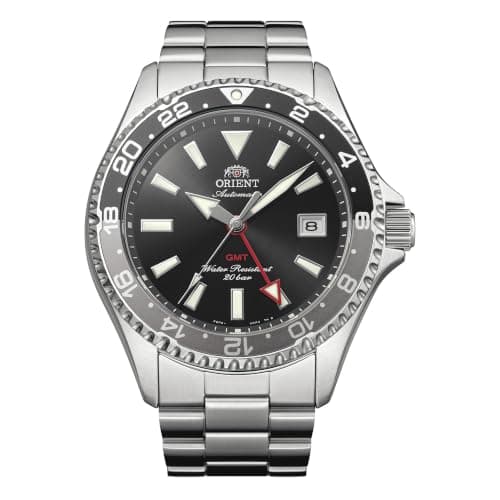
| Orient Mako GMT | 42.8 mm | 49.5 mm | 13.4 mm |
Note.Notice that the Kamasu and the Prospex SRPL11 are almost the same diameter, yet the Seiko is 2.5 mm longer from tip to tip. That gap is often the difference between fitting and overhanging on a small wrist.
How to measure lug to lug and your wrist
You only need a ruler or calipers and a soft tape measure. Measuring a watch you already like gives you a personal reference number that beats any chart.
- 1
Lay your current watch face up on a table.
- 2
Measure from the outer tip of the top lugs to the outer tip of the bottom lugs, in a straight line across the dial. Calipers are easiest, but a millimeter ruler works.
- 3
Wrap a soft tape around your wrist where you wear the watch, just above the wrist bone, and note the circumference.
- 4
Look straight down at your wrist and estimate the flat top width with a ruler laid across it. Many people find it is close to 30 percent of the circumference.
- 5
Compare: if the lug to lug is at or under the flat width, the watch usually sits inside your wrist. A few millimeters over is borderline. More than that tends to overhang.
Common lug to lug ranges by wrist size
These are rules of thumb, not limits. Personal taste, case thickness and strap curve all matter. Plenty of people happily wear a watch that sits right at the edge of the wrist, and fashion has swung between small and large watches over the decades.
A practical approach is to treat the flat top of your wrist as the maximum and aim a little under it for a watch you plan to wear every day. If you have a wrist around 6 to 6.5 inches, cases in the mid to high 30s with lug to lug in the mid 40s are a common sweet spot. Larger wrists open up 42 mm divers and their roughly 48 to 50 mm lug to lug. For full charts, see our watch size chart by wrist size and how to measure your wrist.
- Small wrists: look for short lugs, thin cases and curved lugs that hug the wrist. Our picks are in best automatic watches for small wrists.
- Large wrists: you can wear longer lugs, but very short lug to lug on a big wrist can look undersized. See best automatic watches for large wrists.
- Bracelets: the first link after the lugs often adds stiffness. A bracelet with a short, articulated first link wears smaller than one with a long solid end link.
- Straps: a soft leather or NATO strap drops down from the lugs and hides a little overhang.
Lug to lug on popular models
People search lug to lug for specific watches because they want to know before ordering. For the Seiko 5 Sports range, sizes vary by generation: the newer 38 mm SKX style models are smaller than the 42.5 mm SSK001 GMT, and the 39.4 mm field model sits between them. Check the exact reference in Seiko's specifications and use our Seiko 5 Sports size guide.
For the Hamilton Khaki Field, the 38 mm mechanical is listed with a 38 mm case and a textile strap, and Hamilton also offers 40 mm and larger versions. The difference between those sizes is covered in Hamilton Khaki Field 38 mm vs 42 mm. Field watches often wear compact for their diameter because the bezel is thin and the dial takes up most of the case.
When a listing does not give lug to lug, the maker's own spec sheet usually does. If neither does, ask the seller or compare photos against a watch whose size you know.
Frequently asked questions
What is a good lug to lug for a 7 inch wrist? A 7 inch wrist is about 178 mm around. Using the common 30 percent estimate, the flat top is about 53 mm wide, so most watches up to around 50 mm lug to lug will sit on top of the wrist. Your own wrist shape may differ, so measure it.
Is lug to lug the same as case length? Yes. Some makers list it as case length or height, and some list the case as height by width by depth. The height figure in that format is usually the lug to lug.
Does lug to lug include the bracelet? No. It stops at the lug tips. A stiff end link on a bracelet can add effective length, which is why some watches feel bigger on a bracelet than on a strap.
Can I wear a watch with lugs that overhang? You can, and some people like the look. It tends to be less comfortable, the watch may slide around, and it can look oversized in photos and shirt cuffs.