Explainer
Are automatic watches worth it
Published
Short answer
An automatic watch is worth it if you value the craft, the smooth sweep and a watch that can run for decades with servicing. It is not worth it if you want the most accurate, cheapest and lowest maintenance timekeeping, because a quartz watch beats an automatic on all three. Budget for periodic servicing and occasional resetting before you buy.
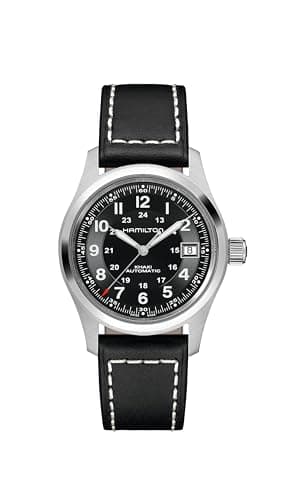
Watches and gear for this
All 7 picks compared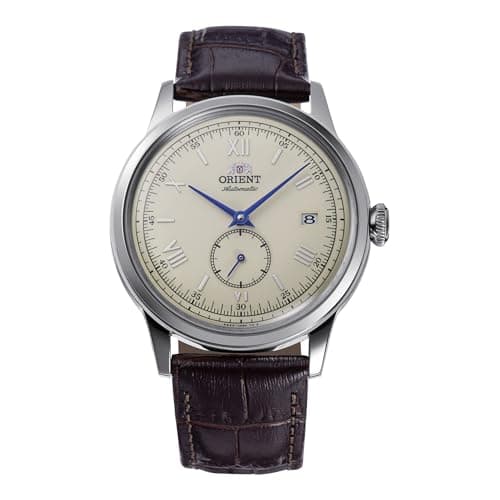
Orient Bambino V7: 38.4 mm with 44 mm lug to lug
See price on AmazonSee it on Amazon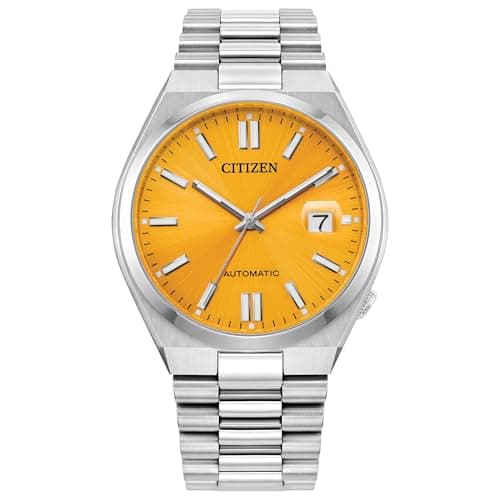
Citizen Tsuyosa NJ0150: 40 mm with sapphire crystal
See price on AmazonSee it on Amazon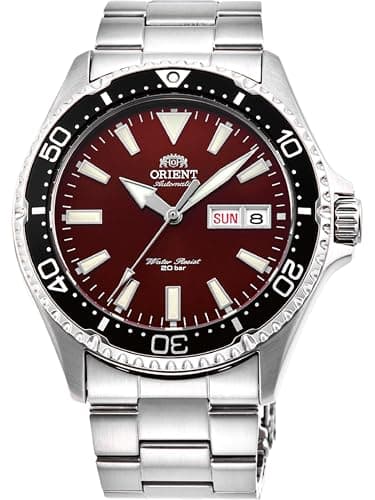
Orient Kamasu: sapphire and 120-click bezel at 41.8 mm
See price on AmazonSee it on Amazon
Automatic watches cost more than quartz, keep worse time and need servicing, yet millions of people buy them every year. This page is for anyone weighing a first automatic, or wondering whether to spend more on the next one. It gives the honest case for and against, explains why automatics are priced the way they are, and covers the ongoing costs that sellers rarely mention: servicing, resetting after the watch stops, and the extras some owners end up buying. If you want a quick primer first, read what is an automatic watch.
What you actually get with an automatic
An automatic watch runs on a wound mainspring instead of a battery. A weighted rotor spins as your wrist moves and winds the spring, and the energy is released through a gear train and a balance wheel that ticks several times per second. There are no electronics. That simple fact explains most of the appeal and most of the drawbacks.
Owners mention the same reasons again and again: the sweeping seconds hand, the visible movement through a display caseback, the sense of owning a small machine, and the fact that a well made mechanical watch can be serviced and kept running for many decades. There is no battery to die at an awkward time, and as long as you wear it, it keeps going.
- Wrist motionYour arm moves.
- RotorA half-moon weight spins on its axle.
- Reversing wheelsTurn both swing directions into winding.
- Mainspring barrelStores the energy as a coiled spring.
- Gear trainCarries the power to the hands.
- Escape wheelReleased one tooth at a time.
- Pallet forkLocks and unlocks the escape wheel.
- Balance wheelSwings back and forth at a steady rate.
The case against: accuracy, upkeep and convenience
Be clear about the trade offs before you buy. A mechanical movement is far less accurate than quartz. Makers publish their own tolerances: for example, Orient Star listings quote +25 to -15 seconds per day. Seiko's official specification for the common 4R36 movement is +45 to -35 seconds per day. A typical quartz watch is accurate to seconds per month. In practice many automatics do better than their spec, but you should expect to reset the time now and then.
Automatics also stop when you do not wear them. Power reserves in the listings we track are often around 40 to 42 hours for Seiko, Orient, Citizen and Bulova movements, and up to 80 hours for Tissot Powermatic 80 and Hamilton's H-10. Take a watch off on Friday evening and a 40 hour movement may have stopped by Sunday, so you reset the time and date. See automatic watch power reserve explained.
| Factor | Automatic | Quartz |
|---|---|---|
| Power source | Mainspring wound by wrist motion | Battery |
| Accuracy | Seconds per day, set by maker spec | Seconds per month on typical models |
| If unworn | Stops after the power reserve runs out | Keeps running until the battery dies |
| Maintenance | Periodic full service | Battery changes, seal checks |
| Seconds hand | Smooth sweep | One tick per second |
| Lifespan | Many decades with servicing | Long, but some movements are replaced rather than repaired |
Why automatic watches cost more
A mechanical movement has many more parts than a basic quartz module, and they must be made and assembled to small tolerances. Jewels, a balance spring, a winding system and finishing all add cost. Better movements add longer power reserves, hacking seconds, hand winding and anti magnetic balance springs such as the Nivachron spring used in some Swatch Group movements.
That said, you do not need to spend a lot. Seiko, Orient and Citizen make their own automatic movements in high volume, which keeps prices down. Our best automatic watches under $500 shows how much watch that budget buys. Swiss brands such as Tissot, Hamilton, Certina and Mido use Swatch Group movements with longer power reserves, which is where the under $1,000 picks come in.
The service costs to plan for
Every mechanical watch eventually needs a service: the movement is taken apart, cleaned, lubricated, adjusted and reassembled, and the seals are replaced. Oils age and thicken over time, and a watch that runs dry wears faster. Service intervals vary by maker and by how the watch is used, so check the manual for your watch rather than relying on a single number.
Costs vary widely by brand, movement and where you go, and a service can cost a large share of the price of an inexpensive automatic. For that reason, many owners of budget automatics simply wear them until accuracy drifts badly, then decide whether to service or replace. For a pricier Swiss watch, servicing is the normal way to keep it for decades. Our how often to service an automatic watch page covers the signs that it is due.
Note.Ask for a written quote before any service and confirm whether it includes a water resistance test and new gaskets.
Who should buy one and who should not
Our full comparison of the two main types is in automatic vs quartz watch.
- Buy an automatic if you enjoy mechanical things, like the look of a sweeping seconds hand or an open caseback, and do not mind resetting the time now and then.
- Buy one if you want a watch to keep for a long time and are willing to service it.
- Skip it if you need precise time without thinking about it, such as for timing work shifts or travel connections. A quartz, solar or radio controlled watch fits better.
- Skip it if you wear a watch rarely and hate resetting it, unless you also plan to buy a watch winder.
- Consider a hybrid. Seiko Kinetic, Citizen Eco-Drive and other movements sit between the two; see automatic vs kinetic vs solar.
Frequently asked questions
Do automatic watches hold their value? Most do not. Like most consumer goods, the majority of automatic watches sell for less than retail on the used market. A small number of popular models from a few brands are exceptions, but buying a watch as an investment is a gamble.
How long does an automatic watch last? With regular servicing, a well made automatic can run for decades. Without servicing it will usually keep going for years, but wear increases as lubricants age. See how long do automatic watches last.
Is a cheap automatic worth it? For many people, yes. Seiko, Orient and Citizen make reliable entry level automatics with in-house movements. Expect looser accuracy specs than a Swiss movement, and decide up front whether you plan to service it or wear it until it needs replacing.
Do I need a watch winder? Not usually. If you wear one watch most days, it stays wound. A winder helps if you rotate several automatics or own one with a complicated calendar that is a pain to reset. Read do you need a watch winder.