Explainer
What is an automatic watch and how does it work
Published
Short answer
An automatic watch is a mechanical watch that winds itself from the motion of your wrist. A weighted rotor spins as you move, winds a coiled mainspring, and the spring's energy is released in small, even steps by the escapement and balance wheel to drive the hands. It needs no battery, but it stops if it is not worn or wound for a day or two.
Watches and gear for this
All 7 picks compared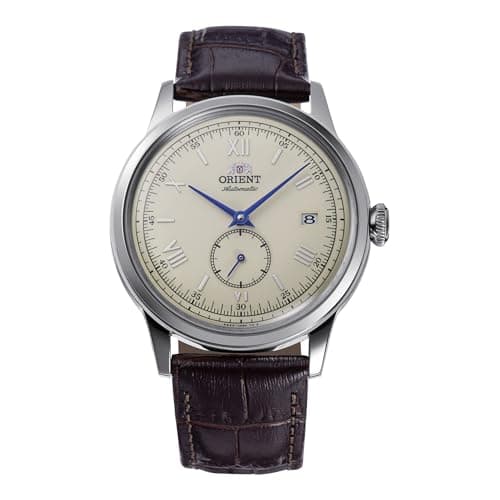
Orient Bambino V7: 38.4 mm with 44 mm lug to lug
See price on AmazonSee it on Amazon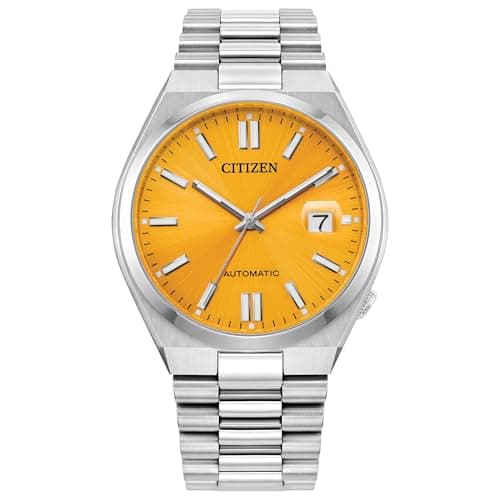
Citizen Tsuyosa NJ0150: 40 mm with sapphire crystal
See price on AmazonSee it on Amazon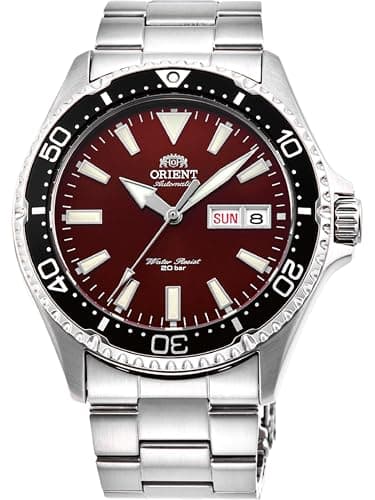
Orient Kamasu: sapphire and 120-click bezel at 41.8 mm
See price on AmazonSee it on Amazon
Automatic watches look simple from the outside, but there is a small machine inside that turns arm movement into accurate time. This page explains what makes a watch automatic, how each part of the movement works in plain terms, and how an automatic differs from a quartz or a hand wound watch. It is for new buyers who want to understand what they are paying for before choosing a first automatic. If you are already comparing models, see our list of the best automatic watches under $500.
What makes a watch automatic
Every mechanical watch runs on a coiled spring called the mainspring. In a hand wound watch, you wind that spring by turning the crown. In an automatic, also called self-winding, a half-moon shaped weight called the rotor sits on the back of the movement. When you move your arm, the rotor swings around its center and winds the mainspring through a set of gears.
That is the only difference that matters. Inside, an automatic and a hand wound watch keep time the same way. Many automatics, such as those with the Seiko 4R36 or the Orient F6922, can also be wound by hand through the crown, which is useful when the watch has stopped.
How the parts work together
Power flows in one direction, from your wrist to the hands. Each stage has one job.
- Wrist motionYour arm moves.
- RotorA half-moon weight spins on its axle.
- Reversing wheelsTurn both swing directions into winding.
- Mainspring barrelStores the energy as a coiled spring.
- Gear trainCarries the power to the hands.
- Escape wheelReleased one tooth at a time.
- Pallet forkLocks and unlocks the escape wheel.
- Balance wheelSwings back and forth at a steady rate.
- 1
Rotor. The weighted rotor turns as your wrist moves. Reversing or switching wheels let it wind the spring whichever way it swings, or in one direction only, depending on the movement.
- 2
Mainspring and barrel. The mainspring is a long, thin coil inside a drum called the barrel. Winding tightens it and stores energy.
- 3
Gear train. As the spring unwinds, it turns a chain of gears that reduces its force and sets the speed for the seconds, minutes and hours.
- 4
Escapement. The escape wheel and pallet fork let the gear train advance one tiny step at a time. This is what makes the ticking sound.
- 5
Balance wheel. The balance swings back and forth at a steady rate on a hairspring. Each swing unlocks the escapement once, so the balance sets the pace of the whole watch.
Do automatic watches need batteries
No. An automatic watch has no battery and no electronic circuit. All its energy comes from the mainspring. This is the main difference from a quartz watch, which uses a battery to vibrate a quartz crystal and a small motor to move the hands.
Some watches mix the two. Seiko Kinetic and similar systems use a rotor to charge a cell, and solar watches charge from light. Those are not automatic in the mechanical sense. Our page on automatic vs kinetic vs solar covers the differences.
| Automatic | Hand wound | Quartz | |
|---|---|---|---|
| Power source | Mainspring wound by rotor and often crown | Mainspring wound by crown | Battery |
| Needs daily action | Wear it, or wind if stopped | Wind regularly | No |
| Typical accuracy | Seconds per day | Seconds per day | Seconds per month |
| Service | Cleaning and oiling over the years | Same as automatic | Battery changes |
What to expect when you own one
An automatic keeps running as long as there is energy in the spring. That reserve is listed as the power reserve. Many affordable movements store around 40 hours: Seiko lists about 41 hours for its 4R35 and 4R36, and Orient lists 40 hours for the F6922. Some newer Swiss movements, such as Tissot's Powermatic 80 and Hamilton's H-10, are listed at up to 80 hours. Read power reserve explained for what that means day to day.
Automatics are less accurate than quartz. Seiko publishes a range of +45 to -35 seconds per day for the 4R36, and Orient lists +25 to -15 seconds per day for several of its movements. A watch running a few seconds a day off is normal. See how accurate should an automatic watch be for more.
Note.Keep automatics away from strong magnets such as speakers, laptop lids and bag clasps. Magnetism is a common cause of a watch suddenly running fast.
Why people still buy automatic watches
A quartz watch is cheaper and keeps better time, so the appeal of an automatic is not practicality. People choose them for the craft of a small machine that runs without electronics, the smooth sweep of the seconds hand, and a movement that can be serviced and kept running for decades. With care, a good automatic can outlast its owner; see how long do automatic watches last.
If you own more than one automatic and rotate between them, a watch winder can keep the spare ones running, though it is optional. Our page do you need a watch winder helps you decide.
Frequently asked questions
Do you have to wind an automatic watch? Not if you wear it most days. If it has stopped, a hand winding movement can be wound with 20 to 40 crown turns, or you can gently swing it to start it. See how to wind an automatic watch.
What happens if I do not wear my automatic watch? It runs until the power reserve is used up, then stops. Nothing is harmed. Wind it, set the time and date, and it starts again.
Can you overwind an automatic watch? No. Automatic mainsprings use a slipping clutch that lets the spring slide once it is fully wound, so extra winding does no harm.
Is an automatic watch the same as a mechanical watch? An automatic is one kind of mechanical watch. All mechanical watches run on a mainspring; automatics add a rotor so the spring winds itself as you wear it.