Explainer
How accurate should an automatic watch be
Published
Short answer
It depends on the movement. Seiko publishes +45 to -35 seconds per day for the 4R36 in the Seiko 5 Sports, Orient lists +25 to -15 seconds per day for many of its calibers, and a COSC certified chronometer must stay within -4 to +6 seconds per day in testing. A watch inside its maker's published range is working as designed.
Watches and gear for this
All 8 picks compared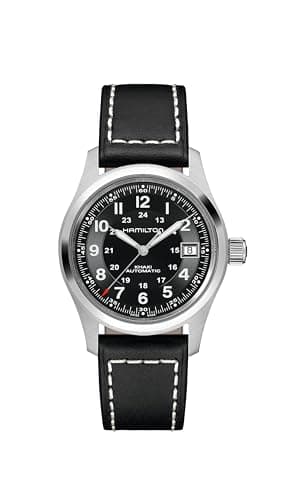
Hamilton Khaki Field Auto 38 mm, H-10, 80 hours
See price on AmazonSee it on Amazon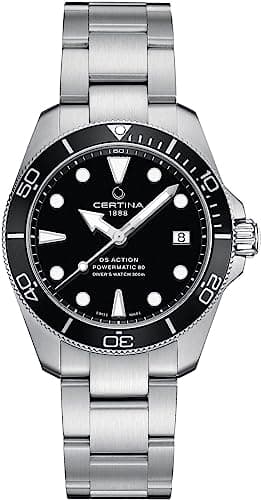
Certina DS Action Diver 38 mm, 300 m, Powermatic 80
See price on AmazonSee it on Amazon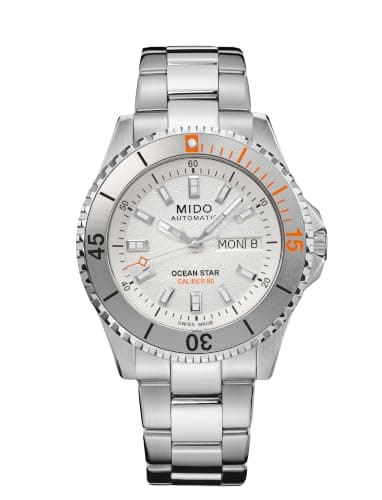
Mido Ocean Star 200 41 mm: 80 hours, day-date
See price on AmazonSee it on Amazon
If your new automatic gains ten seconds a day, is something wrong? Usually not. Mechanical watches drift, and every maker publishes a tolerance for each movement. This page lists published tolerances for movements you are likely to own, explains what COSC and other chronometer standards mean, and covers the everyday factors that push a watch fast or slow. It is for buyers comparing movements and owners checking whether their watch is normal.
Why automatic watches are less accurate than quartz
An automatic watch keeps time with a balance wheel swinging back and forth on a hairspring, usually several times per second. Anything that changes how that balance swings changes the rate: temperature, the position of the watch, how fully the mainspring is wound, magnetism, shocks and aging oil. A quartz watch counts the vibrations of a quartz crystal driven by a battery, which is far steadier.
So an automatic is measured in seconds per day, while quartz is usually measured in seconds per month or per year. That is the trade you make for a movement that runs without a battery. If accuracy is the top priority, read automatic vs quartz first.
- Wrist motionYour arm moves.
- RotorA half-moon weight spins on its axle.
- Reversing wheelsTurn both swing directions into winding.
- Mainspring barrelStores the energy as a coiled spring.
- Gear trainCarries the power to the hands.
- Escape wheelReleased one tooth at a time.
- Pallet forkLocks and unlocks the escape wheel.
- Balance wheelSwings back and forth at a steady rate.
Published accuracy for common movements
These are the makers' own published figures, given as a daily rate range. They are ranges for a new movement in normal conditions, not a promise for every day of wear.
| Movement | Found in | Published accuracy |
|---|---|---|
| Seiko 4R36 / 4R35 | Seiko 5 Sports, many Prospex and Presage | +45 to -35 sec/day (Seiko spec) |
| Seiko 6R35 | Higher Prospex and Presage models | +25 to -15 sec/day (Seiko spec) |
| Orient F6922 / F6T22 and similar | Kamasu, Mako, Bambino and other Orient models | +25 to -15 sec/day (Orient spec) |
| Orient Star calibers | Orient Star skeleton and standard models | +25 to -15 sec/day (Orient Star listings) |
| Miyota 8215 | Many affordable automatics | -20 to +40 sec/day (Miyota spec) |
| COSC chronometer | Any movement certified by COSC | -4 to +6 sec/day average in testing |
Note.Many watches run well inside their published range. A tolerance is the outer limit the maker guarantees, not a typical result.
What COSC and other chronometer standards mean
COSC is the Swiss official chronometer testing institute. It tests uncased movements over about two weeks in several positions and at three temperatures. To pass, the average daily rate must be between -4 and +6 seconds, along with limits on variation between positions and temperatures. Watches that pass can be sold as certified chronometers. In our candidates, examples include the Tissot Ballade COSC and the Mido Multifort Chronometer, both built on Swatch Group movements related to the Powermatic 80.
Some makers run their own stricter tests. METAS Master Chronometer certification tests the cased watch at 0 to +5 seconds per day and includes strong magnetic field exposure. Rolex specifies -2 to +2 seconds per day for its Superlative Chronometer. These are well above the level you need for daily wear, and you pay for the extra testing.
What makes an automatic run fast or slow
- Position: a watch lying dial up runs at a different rate from one standing crown down. You can use this overnight to nudge the rate back.
- State of wind: many movements run slightly differently when the mainspring is nearly empty than when fully wound. A watch worn only occasionally may show worse accuracy than one worn daily.
- Magnetism: a magnetized hairspring makes a watch run very fast, often by minutes per day. Phones, laptop speakers, bag clasps and tablet covers are common sources. See magnetized watch fix.
- Temperature: hairspring alloys change with heat and cold, though modern alloys and silicon springs reduce this.
- Shock: a hard knock can shift the rate or, rarely, tangle the hairspring.
- Age and service: lubricants thicken over years and the rate can drift. See how often to service an automatic watch.
How to measure your watch's accuracy
- 1
Wind the watch fully or wear it for a day so the mainspring is well wound.
- 2
Set the seconds hand exactly against an atomic time source, such as time.gov or your phone clock. On a hacking movement, pull the crown to stop the seconds hand at 12 and push it in on the minute.
- 3
Wear the watch normally for 24 hours, then compare again and note the difference.
- 4
Repeat for several days. Average the results, since a single day can mislead.
- 5
Free timing apps that listen to the tick give a quick estimate, but real wear over several days is the most honest test.
When accuracy is a problem
If the watch is clearly outside its published range, suddenly gains minutes per day, or changes rate a lot from day to day, something has changed. Demagnetizing fixes the most common cause of sudden gains, and it is quick and cheap. If that does not help, a watchmaker can regulate the movement or check whether it needs service. Read automatic watch running fast for a step-by-step check, and automatic watch keeps stopping if it also stops.
If you are shopping and want tighter numbers, look at movements with published +25 to -15 tolerances or COSC certification. Our Swiss automatic watches under $1,000 and Orient guide cover both.
Frequently asked questions
Is 10 seconds a day good for an automatic? Yes. Ten seconds a day is inside the published range of most affordable automatic movements and many people consider it normal.
How accurate is a Seiko 5? Seiko publishes +45 to -35 seconds per day for the 4R36 used in many Seiko 5 Sports models. Many examples run better than that, but that is the official range.
Can a watchmaker make my automatic more accurate? Often. Regulating the movement can bring the average rate closer to zero, though it cannot remove the variation between positions or states of wind.
Are automatic watches accurate enough for daily use? For most people, yes. Even at the edge of a wide tolerance you only need to reset the time every week or two.
What you need for this
- See price on AmazonAmazon
Hamilton Khaki Field Auto 38mm, H-10, 100 m
 See price on AmazonAmazon
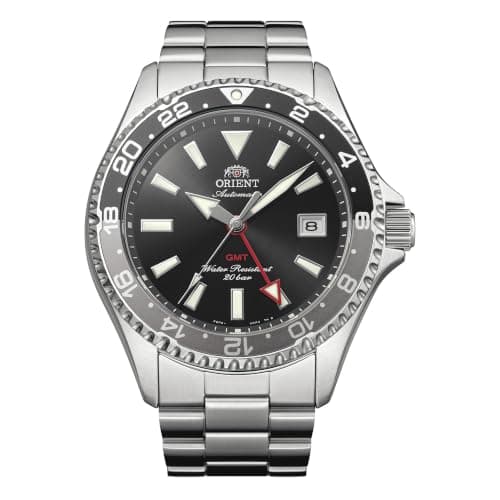
Orient Mako GMT: F6P22 with 24-hour bezel, 200 m
From Best Orient automatic watches: Kamasu, Mako, Bambino and Orient Star
 See price on AmazonAmazon
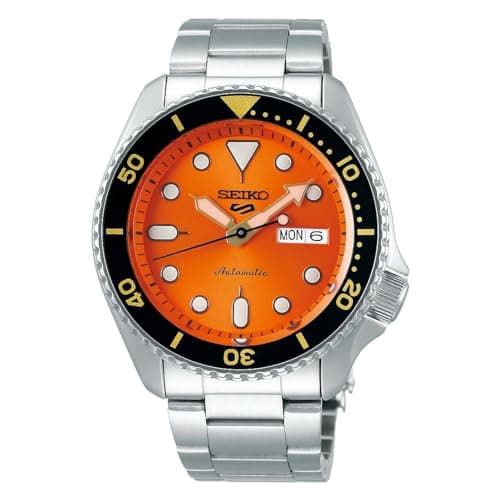
Seiko 5 Sports SRPD59: 4R36, 100 m, rotating bezel