Explainer
What is the Tissot Powermatic 80
Published
Short answer
The Powermatic 80 is a Swiss automatic movement made by ETA, the Swatch Group's movement maker, and used in Tissot watches such as the PRX, Le Locle and Gentleman. Its name comes from its 80-hour power reserve, nearly double the roughly 40 hours of many traditional automatics, so you can take it off Friday night and it is still running Monday.
Watches and gear for this
All 7 picks compared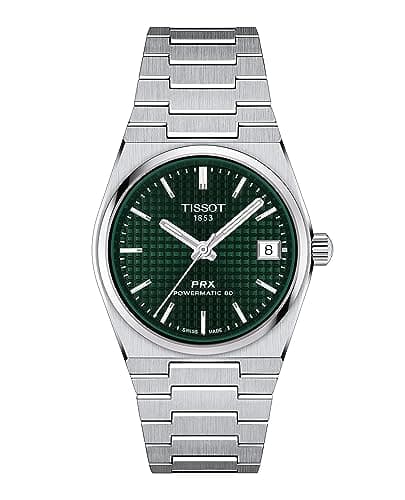
Tissot PRX 35 mm Powermatic 80: smaller wrists
See price on AmazonSee it on Amazon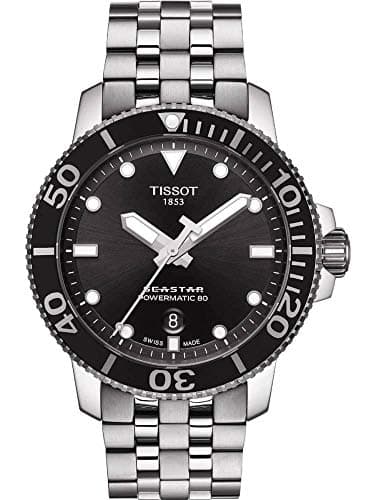
Tissot Seastar 1000 43 mm: 300 m automatic diver
See price on AmazonSee it on Amazon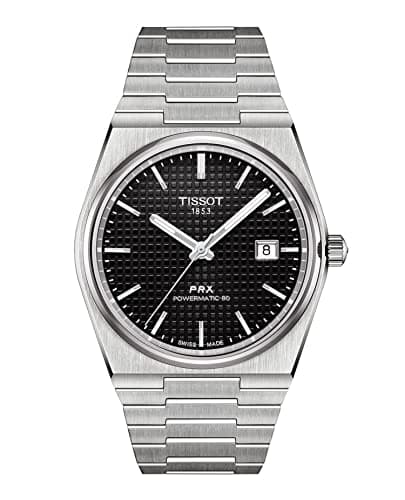
Tissot PRX 40 mm automatic: 10.93 mm, 100 m
See price on AmazonSee it on Amazon
Powermatic 80 shows up on dials, listings and spec sheets across Tissot's range, and closely related versions power Hamilton, Mido and Certina watches. This page explains what the movement is, how the Swatch Group stretched the power reserve to 80 hours, what the silicon and Nivachron versions add, which brands use it under other names, and what that means for you as an owner choosing a PRX, Le Locle or Seastar.
The short version
- Maker: ETA, part of the Swatch Group.
- Type: automatic with hand winding, hacking seconds and, on most models, a date.
- Power reserve: up to 80 hours from full wind, per Tissot's listings.
- Beat rate: 21,600 vibrations per hour (3 Hz), per Swatch Group specifications.
- Variants: standard balance spring, silicon (Tissot calls it Silicium) balance spring, and Nivachron balance spring.
- Used by: Tissot, Hamilton (as H-10 and related calibers), Mido (Caliber 80) and Certina.
How the Powermatic 80 reaches 80 hours
The Powermatic 80 is a redesign of an older ETA automatic architecture. The goal was a much longer power reserve without making the movement bigger. ETA got there with three main changes.
First, the balance beats more slowly. Many classic Swiss automatics run at 28,800 vibrations per hour; the Powermatic 80 runs at 21,600. A slower beat uses less energy per hour, so the same spring lasts longer. Second, the mainspring and barrel were redesigned to store more energy. Third, the escapement was reworked to waste less energy as friction.
The trade-off of a slower beat is a seconds hand that sweeps in slightly larger steps and, in theory, a little more sensitivity to knocks. In daily wear most owners notice the long reserve far more than the beat rate.
- Wrist motionYour arm moves.
- RotorA half-moon weight spins on its axle.
- Reversing wheelsTurn both swing directions into winding.
- Mainspring barrelStores the energy as a coiled spring.
- Gear trainCarries the power to the hands.
- Escape wheelReleased one tooth at a time.
- Pallet forkLocks and unlocks the escape wheel.
- Balance wheelSwings back and forth at a steady rate.
Silicium and Nivachron versions
The balance spring, or hairspring, is the heart of the timekeeping. Traditional steel alloy springs are affected by magnetism and temperature. Some Powermatic 80 versions use a silicon balance spring, which Tissot labels Silicium, and newer versions often use Nivachron, a titanium-based alloy developed within the Swatch Group that resists magnetism better than older alloys.
In practice, both upgrades make the watch more tolerant of everyday magnetic fields from phones, laptops and bag clasps, which is the most common cause of a watch suddenly running fast. Several of our listed models state Nivachron, including Certina DS Action and DS-1 Powermatic 80 references. If you have had a watch magnetized before, these versions are worth paying attention to. Read magnetized watch fix for what magnetism does.
Tissot also offers Powermatic 80 versions certified by COSC, such as the Ballade COSC, for buyers who want a tested accuracy figure. See how accurate should an automatic watch be.
Which brands use the Powermatic 80
These brands are all part of the Swatch Group, so they share movement architecture while finishing, rotors and some details differ. Mido also lists a Caliber 72 with a 72-hour reserve in some models, which is a related but different calibration.
| Brand | Name on the spec sheet | Example models | Listed power reserve |
|---|---|---|---|
| Tissot | Powermatic 80 | PRX, Le Locle, Gentleman, Visodate, Seastar 1000 | 80 hours |
| Hamilton | H-10 (also H-30 and H-40 variants) | Khaki Field Automatic, Murph, Jazzmaster Open Heart | 80 hours |
| Mido | Caliber 80 | Multifort, Ocean Star | 80 hours |
| Certina | Powermatic 80 | DS Action, DS-1, DS Action Diver | 80 hours |
What 80 hours means in daily life
A full wind lasts more than three days. If you rotate two or three watches, a Powermatic 80 watch you took off on Friday is usually still running on Monday morning, so you do not have to reset the time and date. That makes it a good choice for people who do not want a watch winder.
The reserve figure assumes a full wind. If you only wear the watch for an hour at a desk, the rotor may not wind it fully. Giving the crown some turns by hand tops it up. See how to wind an automatic watch and power reserve explained.
Popular watches with the Powermatic 80
The Tissot PRX Powermatic 80 is the best-known example, with an integrated bracelet in 35 and 40 mm sizes. The Le Locle is a classic dress option, the Gentleman a versatile everyday watch, and the Seastar 1000 Powermatic 80 a diver. Hamilton's Khaki Field Automatic and Murph use the H-10. See our Tissot automatic guide, Swiss automatics under $1,000 and Hamilton Khaki guide. If you are deciding on a PRX, read Tissot PRX quartz vs Powermatic 80 and is the Tissot PRX worth it.
Frequently asked questions
Is the Powermatic 80 a good movement? It is a widely used Swiss automatic with a long power reserve, hand winding and hacking seconds, and it is serviced by Swatch Group service centers worldwide. That makes it a sensible choice for a first Swiss automatic.
Is Powermatic 80 Silicium better? The silicon balance spring resists magnetism and temperature changes better than older alloys. It does not change the power reserve.
Can I hand wind a Powermatic 80? Yes. With the crown pushed in, turn it clockwise to wind. Stop when you feel resistance increase; automatic movements have a slipping mainspring that prevents overwinding.
Is the Hamilton H-10 the same as the Powermatic 80? The H-10 is Hamilton's version from the same Swatch Group family, with an 80-hour reserve listed by Hamilton. Finishing and some components can differ.
What you need for this
- See price on AmazonAmazon
Tissot PRX 35 mm Powermatic 80: smaller wrists
From Best Tissot automatic watches: PRX, Seastar, Le Locle and more
 See price on AmazonAmazon
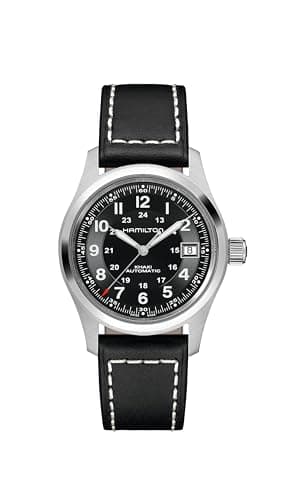
Hamilton Khaki Field Auto 38mm, H-10, 100 m