Fix
Magnetized watch: how to tell and fix it
Published
Short answer
A magnetized mechanical watch usually starts running fast, often by minutes per day, because the coils of the balance spring stick together. Hold a compass next to the watch: if the needle swings as it passes the case, it is magnetized. A watch demagnetizer fixes it in seconds, and many watchmakers do it for little or nothing. It does not usually damage the watch.
Watches and gear for this
All 8 picks compared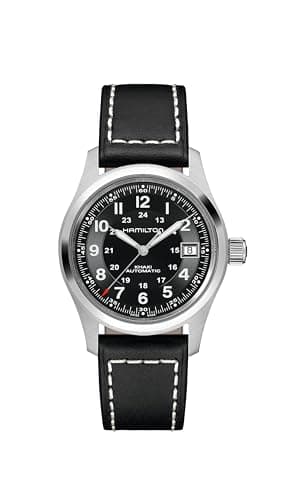
Hamilton Khaki Field Auto 38 mm, H-10, 80 hours
See price on AmazonSee it on Amazon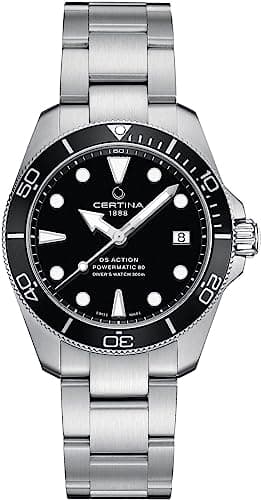
Certina DS Action Diver 38 mm, 300 m, Powermatic 80
See price on AmazonSee it on Amazon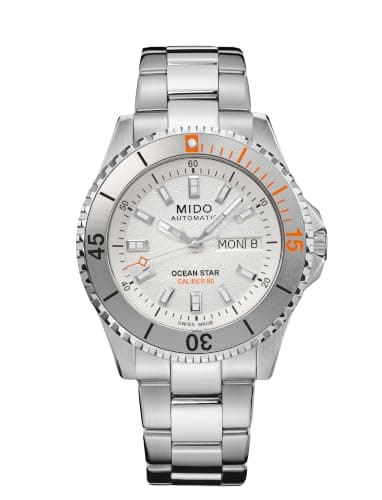
Mido Ocean Star 200 41 mm: 80 hours, day-date
See price on AmazonSee it on Amazon
If an automatic watch that kept good time suddenly gains several minutes a day, magnetism is one of the first things to check. Modern life is full of magnets: phones, laptops, tablet covers, speakers, bag clasps. This page is for owners of mechanical watches who want to confirm whether their watch is magnetized and fix it themselves or know what to ask a watchmaker. It covers the symptoms, the compass test, how to use an inexpensive demagnetizer step by step, and how to avoid it happening again.
Why magnetism makes a watch run fast
The heart of a mechanical watch is the balance wheel and its balance spring, a very thin coil of metal that breathes in and out several times per second. Traditional balance springs are made from alloys that can be magnetized. When that happens, the coils attract each other and some stick together as they swing. The spring acts as if it were shorter, the balance swings faster, and the watch gains time.
The effect can be dramatic, from a small change to minutes per day, and it does not go away on its own. Other steel parts in the movement can also become magnetized, which adds to the problem. Quartz watches are much less affected, although a strong magnet can stop the hands while it is close.
- Wrist motionYour arm moves.
- RotorA half-moon weight spins on its axle.
- Reversing wheelsTurn both swing directions into winding.
- Mainspring barrelStores the energy as a coiled spring.
- Gear trainCarries the power to the hands.
- Escape wheelReleased one tooth at a time.
- Pallet forkLocks and unlocks the escape wheel.
- Balance wheelSwings back and forth at a steady rate.
Signs your watch is magnetized
A sudden change is the key clue. Slow drift over months usually points to aging oils and a coming service instead; see automatic watch running fast or slow.
- It suddenly runs fast, often by much more than its usual daily rate.
- The rate is erratic: very different from one day to the next.
- It happened after contact with a phone, laptop, speaker, magnetic clasp, induction cooktop, or after an airport security scan or MRI room visit.
- In rare cases the watch runs very slowly or stops.
The compass test
- 1
Find a simple magnetic compass. A cheap hiking compass works. A phone compass app does not, because the phone itself contains magnets.
- 2
Lay the compass on a table away from metal and electronics and let the needle settle.
- 3
Take the watch off and slowly move it around the compass, close to the needle, with the dial facing up and then facing down.
- 4
Watch the needle. If it moves noticeably as the watch passes, the watch is magnetized. If the needle stays steady, magnetism is probably not the cause.
Note.A slight twitch near the case is possible with steel cases even when the movement is fine. A clear swing of the needle is the meaningful result.
How to demagnetize a watch
A watch demagnetizer is a small box, often blue, with a button. It creates an alternating magnetic field that scrambles the magnetism out of the parts as you pull the watch away. They are inexpensive and widely sold as a watch tool. Read the instructions for your device, but the usual method is below.
- 1
Remove the watch from any metal bracelet if practical, or at least open the clasp so the watch lies flat. Take off rings and keep cards and phones away.
- 2
Place the watch flat in the center of the demagnetizer.
- 3
Press and hold the button.
- 4
While holding the button, slowly lift the watch straight up and away, to about arm's length, over a couple of seconds.
- 5
Release the button only when the watch is well away from the device.
- 6
Repeat the compass test. If the needle still moves, repeat the process a few times, turning the watch to different angles.
- 7
Wear the watch for a day or two and check its rate against an accurate clock.
If a demagnetizer does not fix it
If the watch passes the compass test but still runs badly, magnetism was not the only cause. The balance spring might have been knocked out of shape, the watch could be out of adjustment, or the oils could be due for renewal. A watchmaker can check the rate and amplitude on a timegrapher and either regulate the watch or recommend a service. See how often to service an automatic watch.
Many watchmakers and jewelers will demagnetize a watch on the spot for free or a small fee, so this is a good first stop if you do not want to buy a tool.
How to prevent magnetism
Our best Swiss automatic watches under $1,000 include several Nivachron equipped models. If you store watches on a winder, read are watch winders bad for watches and how to store automatic watches.
- Keep the watch a hand's width or more away from phones, laptops, tablets and their magnetic covers.
- Do not set the watch on top of speakers, laptops or wireless chargers.
- Watch out for magnetic bag clasps, fridge magnets and induction cooktops.
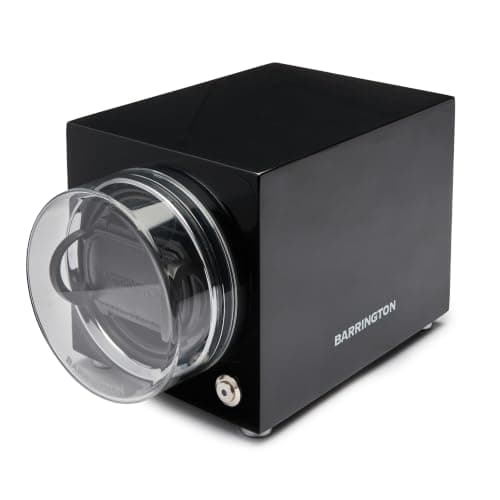
- Store watches away from electronics. If you use a winder, choose one built with low magnetism motors; several winder listings advertise zero magnetization motors.
- Consider a watch with an anti magnetic balance spring. Tissot, Certina and Mido offer Powermatic 80 or Caliber 72 models with Nivachron springs, according to their listings.
Frequently asked questions
Can a phone magnetize a watch? Yes. Phones contain magnets in their speakers and, on many models, for wireless charging accessories. Keeping a watch in direct contact with a phone or its case is a common cause.
Does demagnetizing harm a watch? Used as directed, a demagnetizer does not harm a mechanical watch. Keep quartz watches, cards and electronics away from it while it is on.
Can a magnetized watch fix itself? No. The magnetism stays until it is removed with a demagnetizer.
How do I know if my watch is anti magnetic? Look for an anti magnetic marking, the ISO 764 standard, or a named anti magnetic balance spring such as Nivachron in the specs. Without one, assume ordinary resistance.